I know that this is an awkwardly worded question. What i'm trying to ask is whether or not economics can determine a persons character more so than politics, religion or society. I think that all of these things come together to make a person who they are. Perhaps one more so than the other depending on the person. I think that the economic situation of a person may be determine their behaviour more so than society, but government may mean more than those two.

Sunday, April 7, 2013
Question (NoHN)
Is there any specific element that
determines who a person is more so than another? i.e economics, society etc
I know that this is an awkwardly worded question. What i'm trying to ask is whether or not economics can determine a persons character more so than politics, religion or society. I think that all of these things come together to make a person who they are. Perhaps one more so than the other depending on the person. I think that the economic situation of a person may be determine their behaviour more so than society, but government may mean more than those two.
I know that this is an awkwardly worded question. What i'm trying to ask is whether or not economics can determine a persons character more so than politics, religion or society. I think that all of these things come together to make a person who they are. Perhaps one more so than the other depending on the person. I think that the economic situation of a person may be determine their behaviour more so than society, but government may mean more than those two.

Sunday, March 31, 2013
Religion is a hope mechanism? (NoHN) Response
I am responding to the post here.
" If religion can make some individuals feel better about the universe, I don't it's necessarily a bad thing. However, I believe it should be known that it's true purpose is to provide hope."
I can agree that religion is a mechanism of hope for the people that believe in it, however to say that is its sole purpose could be a bit of a stretch. If people truly believe that a higher being exists then they also believe in their higher being out of fear (think about what would happen if you didn't believe?) and its also a belief that for some, has no real reason to it. Perhaps they believe in God because of indoctrination, which is okay. So, I agree that religion is a hope mechanism, but to tell people that its true purpose is only that seems inaccurate to me.
Friday, March 29, 2013
Question (NoHN)
Are
people more likely to say that they are good people and that their nature is
good because they are good people rather than thank an outside force for the
type of person they are? Does this take the blame off of them for the way they
act and the way they treat others
The reasoning behind this question is religion and government. I believe that people may thank an outside force for their good nature (or bad nature) depending on who they are. If they are religious they may thank God, if they are good people they make thank the government for their good will because it has stopped them from doing things that may be considered wrong. I'm not very sure. I do think that this does not allow people to have the blame taken off of them. Society, as it is now, would never allow people to not take responsibility for their actions.
The reasoning behind this question is religion and government. I believe that people may thank an outside force for their good nature (or bad nature) depending on who they are. If they are religious they may thank God, if they are good people they make thank the government for their good will because it has stopped them from doing things that may be considered wrong. I'm not very sure. I do think that this does not allow people to have the blame taken off of them. Society, as it is now, would never allow people to not take responsibility for their actions.
Sunday, March 10, 2013
Exploring Extremes of Nationalism-Response (NohN)
I am responding to the post here.
What are the boundaries of nationalism and who determines them?
I think in terms of nationalism, it does not just happen to occur. It is the extreme of patriotism meaning that rules, laws and regulation were already in the foundation and extremists just converted them into a blind sort of nationalism.
If a group is created in support of women's' rights, for example, is the enterprise exclusive to accepted members? Would men be allowed if they supported the cause?
I think that if a man attempted to join a woman's rights group, keeping the idea of nationalism in mind, then they would not be allowed to participate. This is just an extremist form of feminism that does actually exist. The group knows who they want to support, and anybody who is not a part of that group they cater towards then they are not accepted, in this case it would be men.
~Ama-Bemma
What are the boundaries of nationalism and who determines them?
I think in terms of nationalism, it does not just happen to occur. It is the extreme of patriotism meaning that rules, laws and regulation were already in the foundation and extremists just converted them into a blind sort of nationalism.
If a group is created in support of women's' rights, for example, is the enterprise exclusive to accepted members? Would men be allowed if they supported the cause?
I think that if a man attempted to join a woman's rights group, keeping the idea of nationalism in mind, then they would not be allowed to participate. This is just an extremist form of feminism that does actually exist. The group knows who they want to support, and anybody who is not a part of that group they cater towards then they are not accepted, in this case it would be men.
 |
| N.B. as a feminist I disagree with this image. I just posted it to explain an extremist feminists mindset in terms of nationalism. |
~Ama-Bemma
Is there a difference between being a patriot for ones country and ones governmental system? (NoHN)
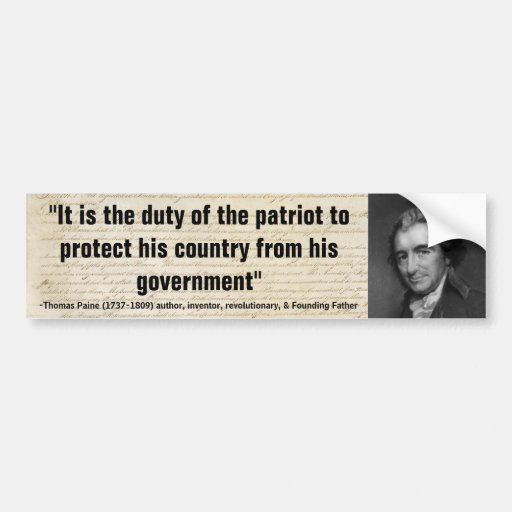
"I have been told often that it is fine for me to disagree with that policy, but now is not the time to disagree publicly. A patriotic person, I am told, should remain quiet and support the troops until the war is over, at which point we can all have a discussion about the finer points of policy"
This point made by Jensen shows that some people might see it as unpatriotic to vocally disagree with policies and issues that one might have with their governments actions towards an issue. This point makes it seem as if a true patriot can be against their government as long as they don't voice their opinions. But if they don't voice their opinions then when can they social justice ever occur? But that is a different question for a different day. "Being a citizen in a real democracy, we have said over and over, means exercising our judgment, evaluating policies, engaging in discussion, and organizing to try to help see that the best policies are enacted. When the jingoists start throwing around terms like "anti-American" and "traitor," we point out that true patriotism means staying true to the core commitments of democracy and the obligations that democracy puts on people. There is nothing un-American, we contend, about arguing for peace."
This point causes Jensen some angst, however, I don't see the issue with it. It contradicts his previous point but it does show that it's okay to disagree with your government in an attempt to better your society.
In conclusion, there is a difference. However, the line of where the difference occurs does seemk to be blurred.
~Ama-Bemma
Sunday, March 3, 2013
Statistics Can't Help- Response (NoHN)
I am responding to this post.
"As we've been discussing nature vs. nurture in class and whether statistics are reasonable evidence for either side. The nature side of the debate has more of a advantage because their argument is behind science. With science, statistics dealing with matters such as brain structure, are more reliable. However, on the nurture side, statistics aren't as reliable. How can we actually 100% determine if a parent's guidance effects our development? How can we distinguish between environmental causes and parental?"
As we stated in class, it's almost impossible to distinguish between environmental and parental causes. To do that we would need to get a sample of parents who are willing to not bring up their children in the way that society is used to. However, what I was wondering was if parents could count as environmental factors in the same way that peers are environmental They can't necessarily push you into a certain direction but they are there to help mold you in a sense.
Intelligence-Question (NoHN)
How
can intelligence be inherited if there are thirteen year olds in graduate
school whose parents, relatives, and known ancestors have average intelligence?
Would that simply be considered a mutation and an outlier to Pinker’s idea?
This is the question I brought up in class, so i'll reiterate some of the points that I thought were valid to my original question. This would go along with Pinker's basic ideas because the base for such intellect to foster must have come from some sort of genetic backing that would allow the child to process information faster, However, the initial genetic backing for the childs' intellect may have been fostered even more by their parent bringing them up in a way that allowed their initial, genetically given intellect to grow. The parents did not change who this child would become but they helped them grow in the way that they were pre-determined to do.
Subscribe to:
Posts (Atom)