Sunday, May 12, 2013

Further Research (response) (NoHN)

I am responding to the post here.

You would be surprised by how much science and Christianity line up. Many people refuse to look into the similarities because they are driven by a great disliking for other opinions.

I have a biased opinion, but I do believe the more advanced humans get technologically the closer they get to   the ideas set forth in the Bible. Social ailments hinder people from getting closer to the idea, but there is a connection.

i.e.

Scientists Used to Believe
But Now Science Shows
The Bible Always Said
Only between one thousand and twelve hundred stars in the whole universe.Trillions upon trillions of stars; they cannot be counted by man!Jeremiah 33:22a "As the host of heaven cannot be numbered..."
The Earth is flat.The Earth is round.Isaiah 40:22a "It is he that sits upon the circle of the earth..."
Light does not move, it is just there.Light moves - and has physical properties; "light waves" or photons.Job 38:19a "Where is the way where light dwells? ..."
The Steady State Theory, the stars are just out there.Each star is unique, and two of the star constellations have gravitational binding.Job 38:31 "Can you bind the sweet influences of Pleiades, or loose the bands of Orion?"
Bad blood should be bled out, to make a person well.Blood is vital to life, sometimes a  transfusion is needed  to add blood.Leviticus 17:11a "For the life of the flesh is in the blood:..."
Air has no weight, it is just there.Oxygen, nitrogen, carbon-dioxide have respective atomic weights that can be measured.Job 28:25a "To make the weight for the winds..."
Winds blow straight across the Earth.Air currents move in large circular patterns.Ecclesiastes 1:6b "... and the wind returns again according to his circuits."
The Earth is carried on someone's back.The Earth floats free in space.Job 26:7b "... and hangs the earth upon nothing."
People just get sick; hand washing is not important.Many diseases spread by contact; wash your hands in running water.Leviticus 15:13b "... and wash his clothes, and bathe his flesh in running water..." 
The stars are all similar to each other.Each and every star is actually unique.I Corinthians 15:41b "...for one star differs from another star in glory."
Something from nothing for no reason - "The Big Bang" model - poof, look a universe!Every action has an equal and opposite reaction; that is real science.  Cause and effect; input is needed to make output.Genesis 1:1 "In the beginning God created the heaven and the earth."

taken from 

These are taken out of context at times, even I realize that, but it does show that people are trying to find some similarities. The Bible teaches people about morality and ethics, something science does not. A big issue is the whole creationism versus evolution thing. The Bible never said that animals did not evolve, it just proves that humans did not, so people can still talk about evolution in the context of actual animals, not the human created, "biologically proven" definition.  The Bible, in my limited understanding, does not go into detail about some of the things science comes up with. A religious individual would say that God designed a lot of the things being discovered in science. The issue with that is some people don't believe in God. That's where science and religion can't convene.


~Ama-Bemma

Vegetarianism vs. Vegan-ism (response) (NoHN)

I am responding to the post here.

As a person who has been a lacto-vegetarian (drinks milk but does not eat eggs) for about 5 years I feel as if I can answer this from a personal viewpoint. In the context of this class it is not enough to be a vegetarian. A person can choose to not eat meat but they may have no ethical reasons for why they are doing it. they may say that they are doing it to be healthy or to cut back on their meat consumption. However, people who look at vegetarianism as an ethical pursuit are the ones who get the most out of it, in my opinion. The main driving point of vegetarianism is to treat animals humanely, veganism is an extreme of it (not in a bad way though). There is some middle ground. i.e.a  lacto-vegetarian drinks milk but not eggs, an octo-vegetarian eats eggs but does not drink milk. The whole point is that no animal should have been harmed in the making of the things you eat. There's a branch of veganism that does not eat meat nor do they wear animal products. There are vegetarians like that as well.  I think that the unborn question you posed is interesting. My opinion is that it deserves the same amount of humaneness as the living. However, if it was never going to be born (some people believe that eggs never grow into chicks) then go ahead, enjoy. It's all about the mindset and if your mindset is one that is humane and if that is your backing for being a vegetarian, then that is enough.

~Ama-Bemma

Friday, May 10, 2013

Question (NoHN)

 Is it possible for an individual to be separate from the idea of a group and for a group to be separate from the idea of an individual? Are all individuals simply a part of a group and lying to themselves when they consider themselves to be an individual?

I brought up this question because it was brought up in class and I thought it was an interesting question. This was also in terms of my ideas on the nature of human nature. I think that a large part of people's natures are their identity within a group and/or individually I think that people are individuals who make up a group, something which is pretty obvious. However, the question came up in class as to whether or not groups exist without individuals. I instantly thought that no, that's not possible, however after thinking about it, can't individual mean somebody that is truly an individual (as in they don't follow the status quo) this would then make it possible for groups to not have individuals. 

Monday, April 29, 2013

Is there any scientific proof for the link between evolution and ethics? (NoHN)

Is there any scientific proof for the link between evolution and ethics?


So many people, I have realized, are rash to believe something if and only if there is scientific evidence for it. My question, along those same lines is if there is any scientific proof for the connection between evolution and ethics. We discussed it briefly in class and I am unsure as to whether that is simply speculation or something that can be backed up with proof. 

I understand that evolution, although I doubt evolution has anything to do with humans, but in the contexts for this class, attempts to prove that evolution can and perhaps has changed human psychology. However, does the psychology of one individual instantly determine their morals? Perhaps it does, i'm unsure. 

~Ama-Bemma 

Sunday, April 14, 2013

Rejecting Sex Drive-Response-(NoHN)

I am responding to the post here :)


I think that using the word sex drive is what makes people disagree with this idea. I think that perhaps stating that humans, just like animals, look for a mate/partner and do what they need to do to find the perfect one. So perhaps the search for a partner (aka sex drive I suppose) is what causes people to do what they do. This is a more naturalistic way to think about it rather than the vulgar way in which society has presented sexual relations. I also think that Freud went a bit overboard with his idea.

~Ama-Bemma

It's there but we can't see it (NoHN)

In chapter 11, Freud's Theory of Human Nature: Pansexuality and Psychoanalysis, there was a section on dreams. While discussing that section we began talking about the human consciousness and how much people are actually aware of. Something was brought up that struck my interest.  There are things that exist but because our minds can't comprehend them we see them as different things or we just don't see them.

A very obvious question popped into my mind; Isn't it totally possible for their to be things all around us right now that we can't see? If it's something that seems as if it can't exist in our 3-Dimensional world and our brain changes it appearance or makes it invisible, then who is to say that something, for example God, doesn't exist? In class somebody brought up a really great point that contradicts my thoughts. He said something along the lines of, if we can't see it then we shouldn't automatically start acting on something that might not be real.  Yes, that's a really valid point. However, how silly would it be to totally ignore the idea of things being around us that we can't see? They could be affecting us all the time. If things are going on that we don't understand and that science can't accurately explain, then who is to say that it's not the "fault" of these things our brains can't understand therefore we don't see?

I don't know. It just seems like an interesting concept...and totally possible.


~Ama-Bemma

Sunday, April 7, 2013

Response (NoHN)

This is a response to this.

 "Someone offers to do the paper for the group project, the whole group agrees, and then every benefits from one person's A work.  Someone offers to pay for your coffee from behind you in line, you get a free coffee."

I'm not sure if this is the same thing as being a free-loader. I looked up the definition, and it seems to me as if there are two different types of a free-loader. The type who takes advantage of generosity and the other that mooches off of the hard work of others. Although I don't think that taking advantage of the good will of others makes one a free-loader, i'm starting to think that the only reason I think that is because the term free-loader has become such a negative one in society. If a free loader is somebody who simply takes advantage of the things around them then, as you said in your post, we're all free-loaders but in varying severity.


Question (NoHN)

 Is there any specific element that determines who a person is more so than another? i.e economics, society etc


I know that this is an awkwardly worded question. What i'm trying to ask is whether or not economics can determine a persons character more so than politics, religion or society. I think that all of these things come together to make a person who they are. Perhaps one more so than the other depending on the person. I think that the economic situation of a person may be determine their behaviour more so than society, but government may mean more than those two. 

Sunday, March 31, 2013

Religion is a hope mechanism? (NoHN) Response

I am responding to the post here.

" If religion can make some individuals feel better about the universe, I don't it's necessarily a bad thing.  However, I believe it should  be known that it's true purpose is to provide hope."

I can agree that religion is a mechanism of hope for the people that believe in it, however  to say that is its sole purpose could be a bit of a stretch. If people truly believe that a higher being exists then they also believe in their higher being out of fear (think about what would happen if you didn't believe?) and its also a belief  that for some, has no real reason to it. Perhaps they believe in God because of indoctrination, which is okay. So, I agree that religion is a hope mechanism, but to tell people that its true purpose is only that seems inaccurate to me.


Friday, March 29, 2013

Question (NoHN)

Are people more likely to say that they are good people and that their nature is good because they are good people rather than thank an outside force for the type of person they are? Does this take the blame off of them for the way they act and the way they treat others

The reasoning behind this question is religion and government. I believe that people may thank an outside force for their good nature (or bad nature) depending on who they are. If they are religious they may thank God, if they are good people they make thank the government for their good will because it has stopped them from doing things that may be considered wrong. I'm not very sure.  I do think that this does not allow people to have the blame taken off of them. Society, as it is now, would never allow people to not take responsibility for their actions. 


Sunday, March 10, 2013

Exploring Extremes of Nationalism-Response (NohN)

I am responding to the post here.

What are the boundaries of nationalism and who determines them? 
I think in terms of nationalism, it does not just happen to occur. It is the extreme of patriotism meaning that rules, laws and regulation were already in the foundation and extremists just converted them into a blind sort of nationalism.

If a group is created in support of women's' rights, for example, is the enterprise exclusive to accepted members?  Would men be allowed if they supported the cause?
I think that if a man attempted to join a woman's rights group, keeping the idea of nationalism in mind, then they would not be allowed to participate. This is just an extremist form of feminism that does actually exist. The group knows who they want to support, and anybody who is not a part of that group they cater towards then they are not accepted, in this case it would be men.

N.B. as a feminist I disagree with this image.
 I just posted it to explain an extremist feminists
 mindset in terms of nationalism.


~Ama-Bemma

Is there a difference between being a patriot for ones country and ones governmental system? (NoHN)

Is there a difference between being a patriot for ones country and ones governmental system, according to Jensen?

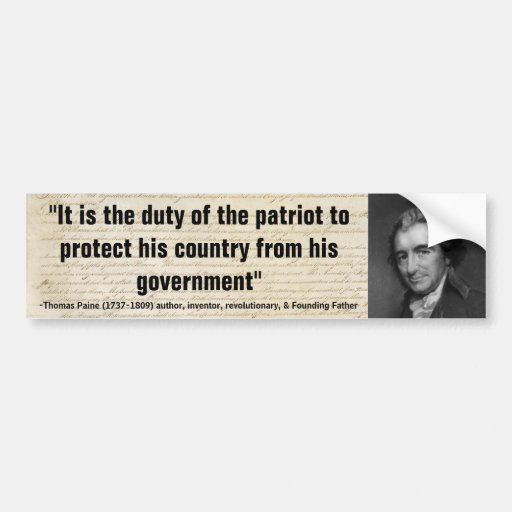
"I have been told often that it is fine for me to disagree with that policy, but now is not the time to disagree publicly. A patriotic person, I am told, should remain quiet and support the troops until the war is over, at which point we can all have a discussion about the finer points of policy"

This point made by Jensen shows that some people might see it as unpatriotic to vocally disagree with policies and issues that one might have with their governments actions towards an issue.  This point makes it seem as if a true patriot can be against their government as long as they don't voice their opinions. But if they don't voice their opinions then when can they social justice ever occur? But that is a different question for a different day.

 "Being a citizen in a real democracy, we have said over and over, means exercising our judgment, evaluating policies, engaging in discussion, and organizing to try to help see that the best policies are enacted. When the jingoists start throwing around terms like "anti-American" and "traitor," we point out that true patriotism means staying true to the core commitments of democracy and the obligations that democracy puts on people. There is nothing un-American, we contend, about arguing for peace."

This point causes Jensen some angst, however, I don't see the issue with it. It contradicts his previous point but it does show that it's okay to disagree with your government in an attempt to better your society.


In conclusion, there is a difference. However, the line of where the difference occurs does seemk to be blurred.

~Ama-Bemma


Sunday, March 3, 2013

Statistics Can't Help- Response (NoHN)

I am responding to this post.

"As we've been discussing nature vs. nurture in class and whether statistics are reasonable evidence for either side.  The nature side of the debate has more of a advantage because their argument is behind science.  With science, statistics dealing with matters such as brain structure, are more reliable.  However, on the nurture side, statistics aren't as reliable.  How can we actually 100% determine if a parent's guidance effects our development? How can we distinguish between environmental causes and parental?"

As we stated in class, it's almost impossible to distinguish between environmental and parental causes. To do that we would need to get a sample of parents who are willing to not bring up their children in the way that society is used to. However, what I was wondering was if parents could count as environmental factors in the same way that peers are environmental  They can't necessarily push you into a certain direction but they are there to help mold you in a sense.

Intelligence-Question (NoHN)


   How can intelligence be inherited if there are thirteen year olds in graduate school whose parents, relatives, and known ancestors have average intelligence? Would that simply be considered a mutation and an outlier to Pinker’s idea? 

This is the question I brought up in class, so i'll reiterate some of the points that I thought were valid to my original question. This would go along with Pinker's basic ideas because the base for such intellect to foster must have come from some sort of genetic backing that would allow the child to process information faster, However, the initial genetic backing for the childs' intellect may have been fostered even more by their parent bringing them up in a way that allowed their initial, genetically given intellect to grow. The parents did not change who this child would become but they helped them grow in the way that they were pre-determined to do. 

Sunday, February 24, 2013

"Choking on Beliefs" Response Post- NoHN

I am responding to the post here.
with reference to the post here.

"If you don't want someone to tell you what to believe, then you can't tell them what to believe."

This is a grand idea, but it can't be put into practice  One of the core objectives of some religions is to convert others into it so that the whole world may be enlightened. It's one of the points. I think it's an a-okay point as well. The only issue is when it's taken to an extreme and people are hurt, killed, or made upset over it.


"I believe that even if people refrained from forcing their beliefs on others, the "culture war" would still be just as much of an issue because it would still affect public policy decisions. For example, the controversial issues of gay marriage and abortion would still be just as relevant. The opinions of the two opposing sides would still be just as strong, and government officials would still have to make a decision regarding these issues. "

The issue here is that even if religion was taken out of the factor people would put their moral beliefs into policy making. Abortion issues at the core have less to do with religion and more to do with a persons opinion and moral values on the ideas of death, killing, and what constitutes a life.So these agendas that are being pushed are less of a religious thing and more of an individual trying to make everybody believe what they believe in type of thing. I agree that even if people stopped blatantly shoving their opinions down our throats we would still have an issue but to me that issue is not religion, it's the morals and values of the people we elect and keep in office. If we the people picked them then aren't we to blame if we dislike them pushing their moralistic values on us? We must have picked them for some sort of moralistic value in the first place very if it was on a very basic and elementary level.


As Aly said, "On a very basic level, there isn't much wrong with that.  You think that you're right, and you want other people to be right, too." The issue is when we start to upset other people. It's societies fault that things like this are allowed to happen, but we are society. So we continue, perhaps unknowingly, the things we hate by continuing to support and or pay for these people, companies and organizations to rule over us with their values.

The issue is that year after year people are put into office that we don't necessarily agree with. Why do we continue to put them there if their values and morals bother us? That's the question. 


and this is the answer  


~Ama-Bemma

Question (NoHN)

**Over time religions that were used to explain events that were unexplainable (such as the myths of the ancient Greeks and Romans) have come and passed away. What has caused Christianity to last as long as it has without sufficient proof of for any of its claims? Is the lack of truth a determining factor for the naturalists’ argument? **

As we discussed in class, science continuously fills in the gaps that religion branches out upon. However, people still choose to have faith even it lacks logic. What has caused this? Well a few thing. Some people are indoctrinated into the faith while others instantly relate "miracles" to a higher being. Some people choose to believe in an all powerful Father because it sounds pretty good to have a God on their side. Are these logical? Not really. Is it justifiable? It depends on the individual. If an individual chooses to believe then let them believe. 

The lack of sufficient proof is the base for the naturalists' argument. Is this logical? Yes. Is it justifiable? Once again it depends on the individual.  But this is a determining factor for their arguments. It's a valid one that is ignored by Christians because of a line in scripture that states "Colossians 2:8 See (PAM) to it that no one takes you captive (PAP) through philosophy and empty deception, according to the tradition of men accordingto the elementary principles of the world, rather than * according to Christ"
this encourages believers to turn a blind eye to the logical and sound statements that are made by people who are naturalists (not just naturalists, everybody in general).


~Ama-Bemma
"But nonbelievers are overreaching when they dismiss the phenomenon
 of religion as wrong and useless because it so often lacks a basis in
 evidence. The fact that millions of people get something positive
out of a religion – even if it is based
 in superstition – *does* mean
 something. But that’s not to say it’s True, only that it has Value.
 For many people, religion is about being part of a community and
 being part of something bigger and more important than themselves."
~doctrine of the flying spaghetti monster


Sunday, February 17, 2013

Is Free Will an Illusion? Post Response (NoHN)

I am responding to the post here.


"if you can choose between two doors, Door A and Door B, but unbeknownst to you, Door B is locked. If you choose Door A, is that free will or was it determined that you would go through Door A? "

My answer to this is yes. The individual was destined to go through that door. Maybe they attempted to open door  and then realized it was locked and then went to door A, well, in my opinion then that was determined as well. Some previous series of events led to that door being locked and it lead to that individual attempting to open that door. It gives an illusion of free will that does not really exist.  The fact that I looked through about half of our classmates blogs before "deciding' to respond to yours was also destined to occur. Both examples are caused by past events that have caused current preferences which have lead to unavoidable actions that were bound to occur. To think that I would have responded to a different blogpost or to say that an individual would have gone through door B means that we are setting up an entirely new group of events that would have preceded the event itself. To think this way is just like saying, "I'm me, but if I weren't me (because we are the sum of our situations and events) then this would have occurred (something that couldn't have occurred without changing the premises for the argument). "

In conclusion, yes. We were determined to do whatever it is that we think we chose. We don't know that things are bound to happen, therefore we are given an illusion of choice. 


~Ama-Bemma

Saturday, February 16, 2013

Does determinism exist outside of the realm of time? (NoHN)


In class we discussed that the idea of time is a human made one. Time, we said, can only be described using physical terms. i.e. time is passing us by, that time went by quickly, this assignment will take a short time etc etc. I feel as if perhaps determinism can exist outside of the realm of time. I doodles the idea in my notebook during class because it was the only way that I could explain my thoughts to myself.

I'm hoping that it makes sense to you as well. I was looking at this through a theological lens (it just helped me understand the concept a bit more) and that's how I came up with this question. If God= determinism (since religiously He knows everything that will occur and we can be judged based on things that we've done that He chooses not to interfere with) and since He exists in a timeless state then can't determinism exist without time as well and can't it already know what has occurred if time doesn't really exist?


Time with the concept of movement is a line because we think of time having some sort of movement.


figure 2

but determinism takes into account everything. So determinism surrounds our concept of time because it already knows what's going to occur. So our sense of free will has already occurred at some point in time but determinism knows what our "choices" will be, so although we think we are choosing something it's already known and it's known that we wouldn't have chosen anything else, so I guess that we're not really choosing anything.


but if time doesn't move then it could just be a point (.) that determinism knows already.

So if time is just a human made concept that we can describe with only physical terms then who is to say that time is moving at all? It could simply be a point in which everything has occurred instantaneously. Maybe people are just to slow to know that time has already happened. This is just an idea.


I had another drawing that my computer for some reason will not let me upload, but it was just a point with the same dashes as figure 2.


My conclusion is that determinism can exist outside of time. If time is a concept that is not fully understood then there's nothing to say that time and determination go hand in hand. I feel as if wondering if everything we do is by choice or not by choice is not a simple question. I also feel that we are all probably doing what we're doing because it's the only thing we would have done if our pasts, situations and circumstances are taken into account. The argument of "well, if the circumstances were different..." is not valid either because  the circumstances are also a result of past situations and circumstances. So everything is a result of something else and therefore was destined to happen. So the idea of determinism existing outside of time is possible if determinism knows everything that was going to occur without the issue of time conflicting with it.

~Ama-Bemma

Sunday, February 3, 2013

How Do We Learn, Can It Be Considered Recollection As Plato And Socrates Suggest?- Post Response (NoHN)

I am responding to this post.


I somewhat agree to this post. Knowledge is mostly learned. We go to school to learn and add onto our knowledge. I believe that people inherently know things but do not know how they know it or what its purpose is. School teaches those things, but people learn things through observation and experience. Maybe the soul that Plato refers to is simply instincts. So in response to this comment, "(I am not assuming that everything can be taught, but I will argue that what cannot be taught are instincts.) In Plato's dialogue between Socrates and Meno about the uneducated slave doing geometry, the conclusion that recollection from the soul, is how learning occurs is made." I believe that Plato was just
referring to the instinctual things we know, things that most people have always known how to do.

The Allegory of the Cave (NoHN)


While reading, I was curious about the allegory of the cave. I've heard this story before, and this time I questioned what is more real; the shadows or the people who cast them. My basic understanding of Plato's ideas about forms is that what the mind can think up is more powerful and more real than the physical manifestation of that object. I know that the idea of forms does not necessarily apply to this, but I wanted to see if its possible to think about the allegory of the cave in this manner.

I think that according to Plato, the slaves thoughts about the shadows were more real than the shadows themselves because their thoughts made it so. However, the issue is that we all know that the shadows are false and are just a representation of the people walking by. Does this make the idea of what the shadows are anymore real or false for the slaves? I don't think so. I think that it's possible to have more than one reality if it is seen through the eyes of different individuals. People can have different thoughts and they can understand their reality in a different way, and if there is an infinite number of forms then perhaps both of the forms, the real and the shadows, could be true and real in their own ways. 


~Ama-Bemma